The Panzer IV was one of the most widely used tanks by German forces during World War II. Its chassis was also used as the basis for assault guns, tank destroyers, anti-aircraft tanks, engineer tanks, bridge-laying tanks, and many other specialized vehicles.
The idea for a medium tank with these specifications was proposed in the early 1930s. In 1934–35, Krupp AG, Rheinmetall-Borsig, and MAN were invited to compete in designing a vehicle with a weight of 18 tons, a top speed of 35 km/h, and a 75 mm short-barreled gun as its main armament. On the battlefield, the Panzer IV was intended to operate alongside the Panzer III as an infantry-support tank. Krupp's design was selected for full-scale production, and the first production series, the Ausf.A, began production at the end of 1937.
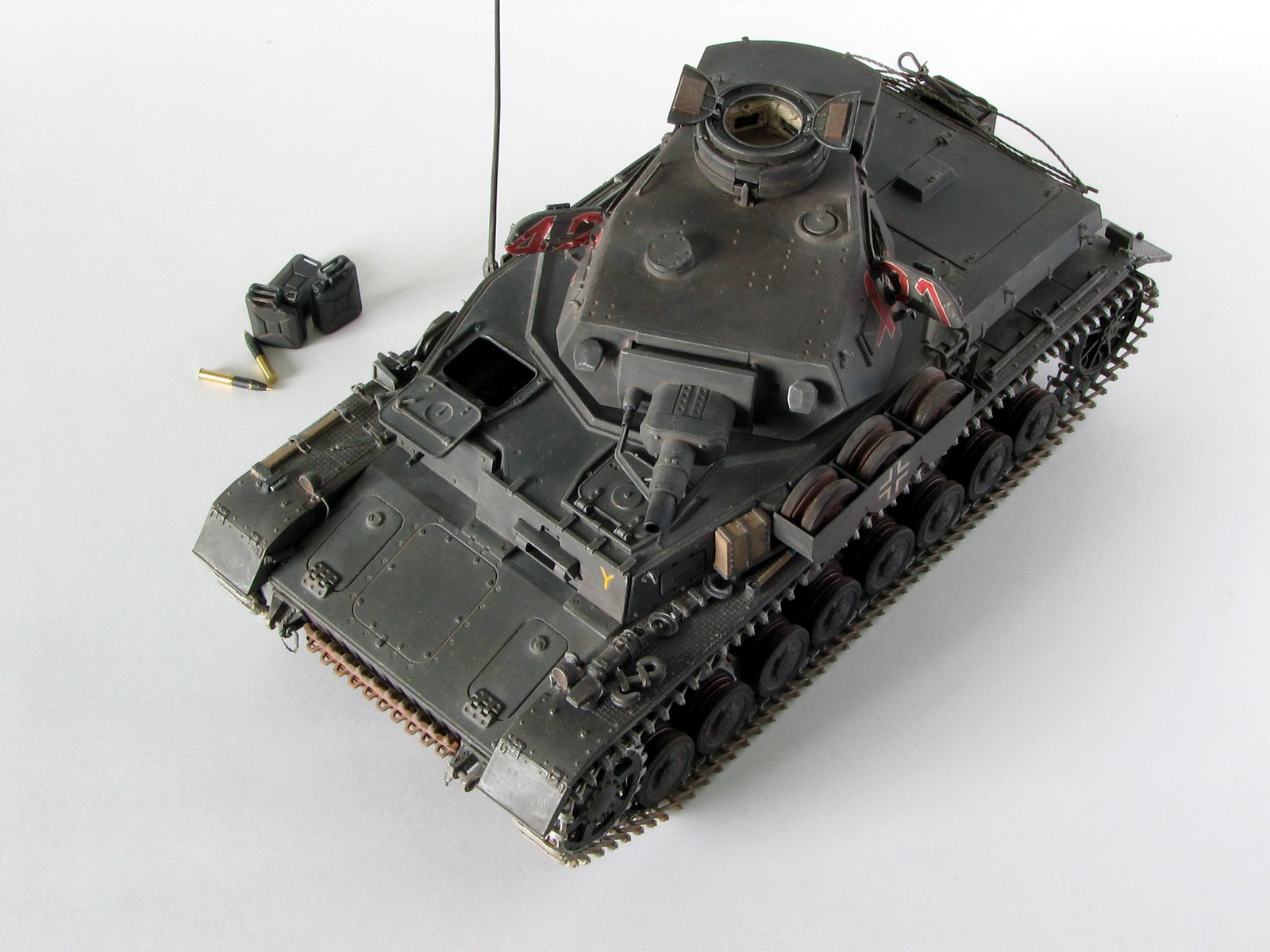
The Panzer IV Ausf.E differed from earlier variants through its increased hull armor thickness on the front and sides. Beginning with the Ausf.E, a stowage bin, known as the Rommelkiste, was also mounted on the rear of the Panzer IV turret. Like other Panzer IV variants, it was powered by a 12-cylinder Maybach HL120 TRM engine producing 300 horsepower, giving the 21-tonne vehicle a top speed of 40 km/h. Its main armament was the short-barreled 75 mm KwK 37 L/24 gun, supplemented by two 7.92 mm MG 34 machine guns, one mounted in the turret and the other in the hull. The Panzer IV had a crew of five. A total of 233 Ausf.E vehicles were produced between 1940 and 1941.



1 comment:
Cool pic!!
Post a Comment