03 July, 2018

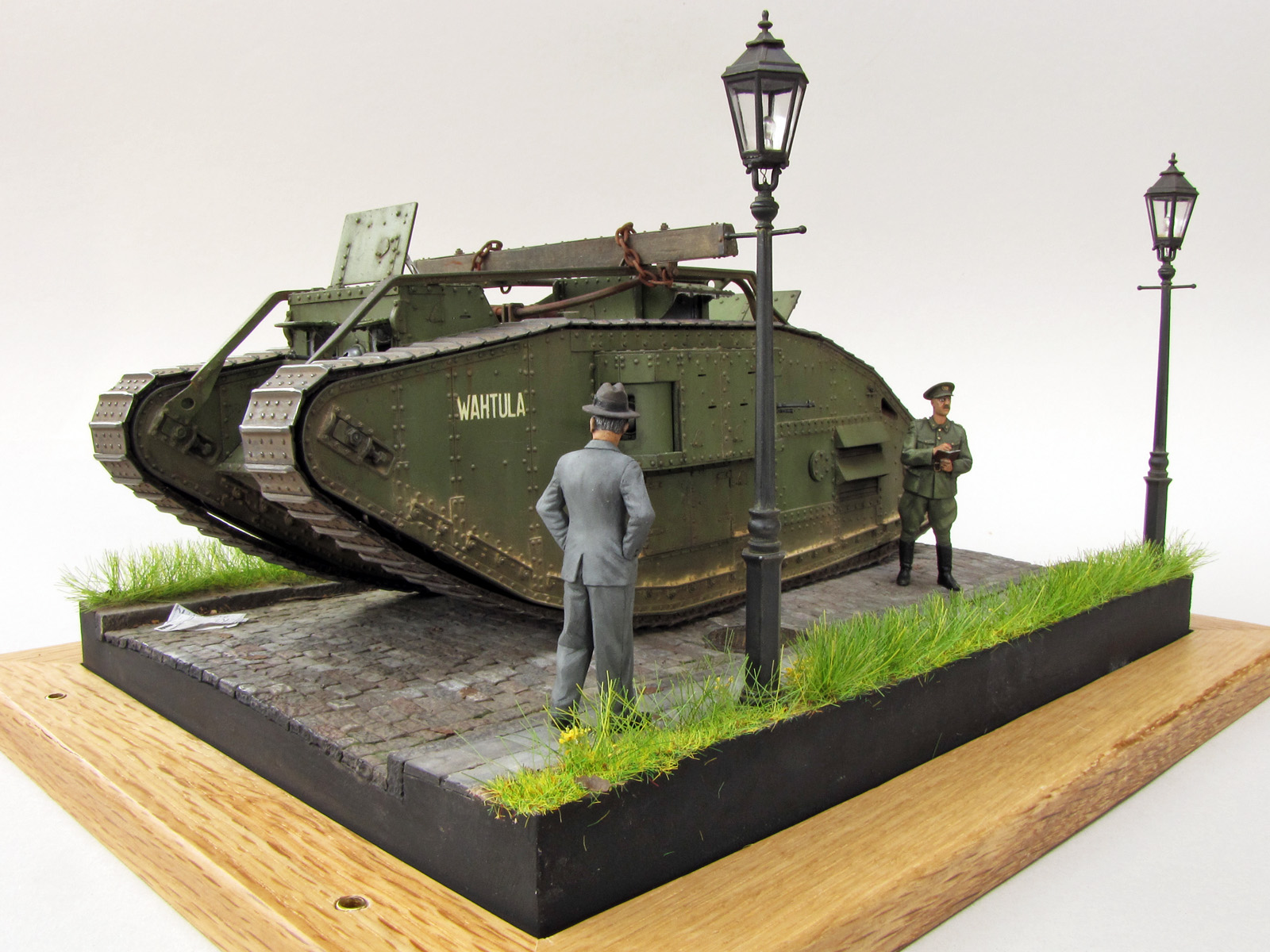
Mark V tank "Wahtula"

The British Mark V was a heavy tank produced during the First World War. A direct development of the Mark I, the first tank to be used successfully in combat, its origins go back to the very beginning of tank warfare. The Mark V was produced from 1917 to 1918 in three configurations: the gun-armed Male, the machine-gun-armed Female and the Composite or Hermaphrodite, which combined both types of armament. The Mark V was later developed into the Mark V* and Mark V**, both of which had lengthened hulls.

Mark V tanks reached Estonia through General Nikolai Yudenich’s Northwestern Army. When the army retreated to the western bank of the Narva River, six tanks were handed over to the Estonian and Latvian armed forces. The first Estonian tank crews completed their training at the beginning of 1920, but the Mark V tanks saw no action under the Estonian flag during the War of Independence.

Wahtula was a Composite Mark V, with a machine-gun sponson on the left and a gun sponson on the right. Its original number in British service was 9349. In the Northwestern Army, it was named Бурый медведь. After entering Estonian service, it was renamed Wahtula. Its armament consisted of a Hotchkiss 6-pounder gun and five .303-inch Hotchkiss machine guns. The tank was powered by a 19-litre Ricardo six-cylinder petrol engine producing 150 hp. With a weight of 28.5 tonnes, however, it could reach a top speed of only 7.5 km/h.

The model depicts Wahtula in service with the Estonian Auto-Tank Regiment in the late 1920s or early 1930s. The scene could represent a rest stop during the tank’s return to its base after manoeuvres.

More about the model and its construction can be found at this link

Model: 1:35 Meng Model TS-020, British Heavy Tank Mk.V Male
+ 1:35 Meng Model TS-029, British Heavy Tank Mk.V Female
+ Friulmodel ATL-148, Mk IV Tadpole Tail Mk V / Mk IX
+ Aber 35 L-207 Barrels for British WWI Tank Mk.V Male
+ 3X Aber R-21 Pyrene Fire Extinguishers Used in British Army
+ Aber PP16 Engraved Plate (140 x 39 mm) Pattern-16
WWI British tank Mark V Mk.V Bolts & Nuts for Idlers 1/35
+ Diorama Debris 1350007; 1350009; 1350011; 1350013; 1350019
+ Miniart 35560 Street Lamps & Clocks
+ Miniart 35086 German Civilians
+ Miniart 35041 German Soldiers w/Fuel Drums 
+ Hornet HBH10, 5 heads wearing British style Officer's caps


12 March, 2018

LWS Land-Wasser-Schlepper (early production)

The Land-Wasser-Schlepper, or LWS for short, was an amphibious tractor produced in small numbers for the German armed forces. Its development and operational history are poorly documented, so reliable information about the vehicle is scarce. In May 1935, requirements were issued for an amphibious cargo tractor capable of travelling both on land and in water while towing a trailer carrying an armoured vehicle or other military cargo. Rheinmetall-Borsig AG was awarded the contract to design and build the prototype. The first three prototypes were demonstrated to General Franz Halder on August 2, 1940.

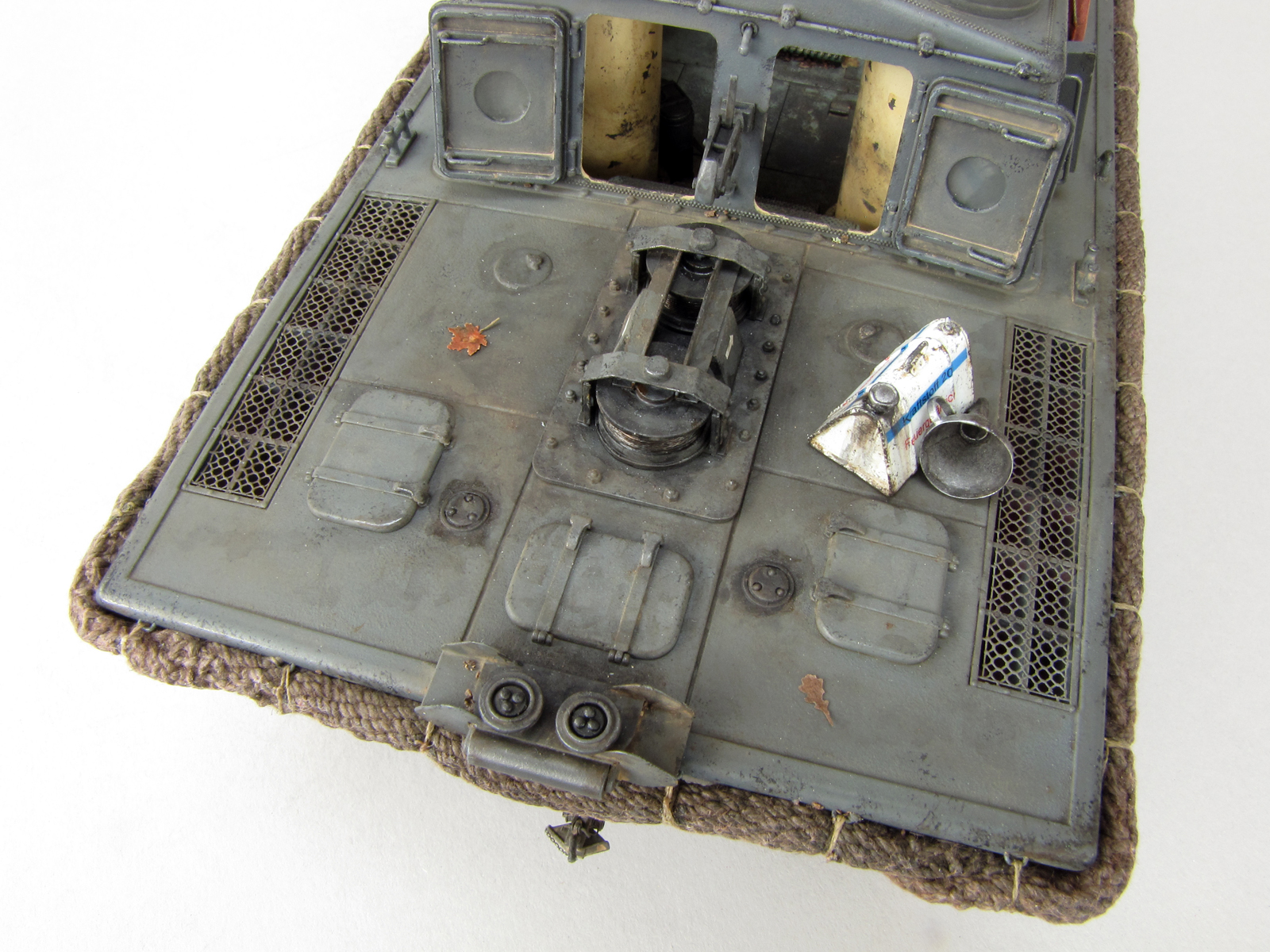
Powered by a Maybach HL 120 TRM engine, the LWS shared many components with the Panzer IV, including its engine and transmission. A transfer gearbox driven by the engine powered two four-bladed propellers at the stern. On land, the vehicle was steered using a lever-operated clutch-and-brake system. In water, a steering wheel was used to control two synchronized rudders at the stern. The LWS had a top speed of 40 km/h on land and 12.5 km/h in water and weighed about 16 tonnes. It had a crew of three to five men, while the cabin could accommodate up to 20 passengers. Additional personnel could be carried on the external deck if necessary. The total number of Land-Wasser-Schleppers built by the end of the war is believed to have been either 21 or 23. Photographic evidence confirms the existence of at least 19 vehicles.

LWS 300 was built as the third prototype. During the second half of 1940, it underwent extensive testing at Ostend in Belgium. In July 1941, LWS 300 was assigned to Pi.Ldgs.Kp. 777, and in September of the same year, the entire unit was transferred to Riga. From there, the unit travelled via Pärnu and Paatsalu before beginning operations to capture Estonia’s main islands in mid-September.

Muhu Island was captured without resistance on September 16, and Kõinastu Islet was taken after brief fighting on September 17. At the end of the month, the unit was stationed at Küdema on Saaremaa, where it carried out amphibious landing exercises in the bay. On October 11, a landing operation was carried out at Külaküla on Hiiumaa. Another landing was made at the same location the following night.

The unit continued to carry out landing exercises and transport operations in the Väinameri area until the end of October. It then moved first to Rohuküla and later to Virtsu. On November 9, responsibility for the area was handed over, and the unit returned to Riga for repairs and maintenance. Pi.Ldgs.Kp. 777 was later transferred to Lindau and then to the Sea of Azov. The later fate of LWS 300 remains unknown.

The model depicts LWS 300 as it appeared during German military operations on the Estonian islands in September and October 1941.

More about the model and its construction can be found at this link

Model: 1:35 Bronco CB-35031, Land-Wasser-Schlepper (Early Production)
+ Friulmodel ATL-102, Land-Wasser-Schlepper (early/mid) tracks
+ Voyager Model PE35283, WWII German Land-Wasser-Schlepper Amphibious Tractor Mid Production
+ Thachweave Products TW007, 1:35 Land Wasser Schlepper for Bronco kit
+ Orange Hobby G35-023-48, Fire extinguisher
+ U-models Nr. UM 095, 1:35 LWS Crew #5
+ Hornet HGH 18, 5 heads with WW2 German army Sidecaps
+ 1120 Production Z-06 German Vehicle Rear Tow Pintle
+ 1120 Production Z-01, WW2 German panzer Headphone
+ Verlinden Productions 1643, 1:35 Bottles, Crates and Cans
+ Plus Model 115, Fuel-Stock Equipment Germany WWII
+ Plus Model 034, German Hot Box