20 November, 2024

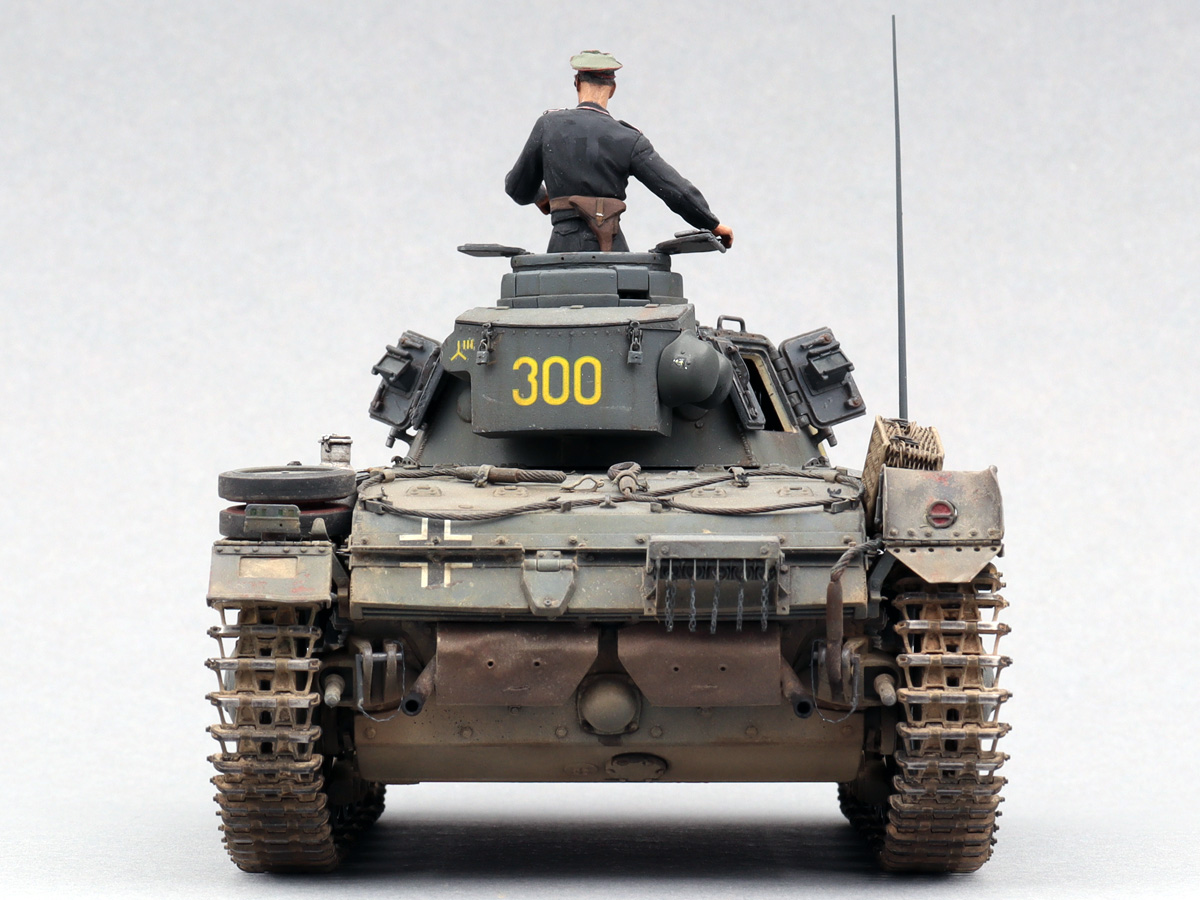
Panzer III Ausf.G

The Panzer III was a German medium tank produced between 1937 and 1943. Over the course of the war, it became one of the Wehrmacht’s main workhorses. Developed alongside the Panzer IV in the second half of the 1930s, it was initially armed with a 37 mm gun and later with a 50 mm gun.

The Ausf.G was a transitional version of the Panzer III. During its production run, it received a new 50 mm KwK 38 L/42 main gun, wider tracks, a redesigned commander’s cupola, additional armour and numerous other modifications. Consequently, individual Ausf.G tanks could vary considerably in appearance and features. A total of 594 vehicles were built between April 1940 and February 1941.

The tank weighed 20.3 tonnes and was powered by a 300 hp Maybach HL 120 TRM V12 petrol engine, giving it a top speed of 40 km/h on roads and 18 km/h cross-country. It had a five-man crew.

The model depicts a tank of the 3rd Company of the 4th Panzer Division, operating on the Eastern Front in 1941.

More about the model and its construction can be found at this link

Model: 1:35 Dragon 6792, Panzerbeobachtungswagen III Ausf.F
+ Voyager Model PE35363 Panzer IIIAusf. E/F Basic Set
+ Voyager Model PE35364 Pz.Kpw.III Ausf. E-H Fenders
+ Aber 35L64 50mm KwK L/42 Pz.Kpfw. III Ausf.G,H,J barrel
+ Aber 35L-70 MG 34 Set of 2 Barrels
+ T-Rex Studio TR35028 EEII Gemany Lifting Hook Set C
+ MasterClub MTL35009 Tracks for Pz.Kpfw.III, Pz.Kpfw.IV 1940-41 400mm early
+ Orange Hobby G35-003-35 Universal Antenna for German Combat Vehicle Early version WWII
+ Orange Hobby G35-023-48 Fire Extinguisher for WWII German Combat vehicle Early Version
+ Elefant Corporation E35148 Turret Rain Gutters for Pz.III
+ Eduard 635023 WWII German Notek Headlights
+ E.T. Model WWII German Vehicle Notek Light
+ Echelon Fine Details AXT351040 4. Pz.Div. Panzer III Ausf. E, F, G & J
+ Miniart 35191 Tank Crew (France 1940)
+ Hornet & Wolf HGH18 German Heads w/ Army Side Caps WWII
+ Legend Productions LF0108 Dear Mom - WW2 German Soldiers


10 March, 2024

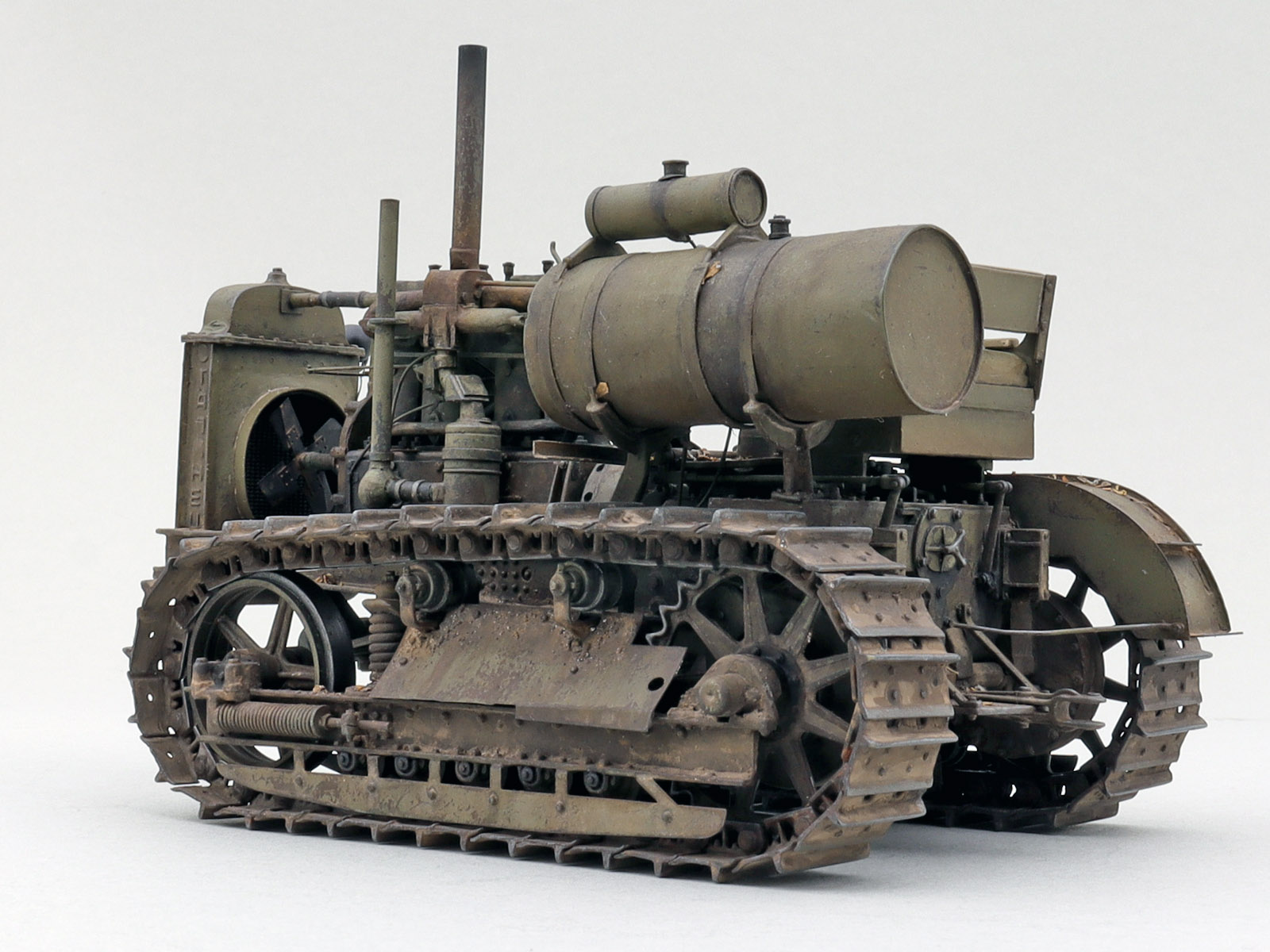
Stalinets S-60

The Stalinets S-60 was an agricultural tractor produced in the Soviet Union at the Chelyabinsk Tractor Plant between 1933 and 1937. It was essentially a copy of the American Caterpillar Sixty, adapted to the metric system.

The tractor was produced during the Second Five-Year Plan (1933–37), primarily for use on kolkhozes—Soviet collective farms. Many were operated by state-run machine tractor stations, which supplied and maintained agricultural machinery for the kolkhozes.

The S-60 was also widely used by the Red Army at the beginning of the Second World War, particularly for towing artillery. It was gradually superseded by the similar diesel-engined S-65. Many S-60 tractors were captured by German forces and subsequently used by the Wehrmacht.

The tractor was powered by an 18.45-litre four-cylinder liquid-cooled engine, producing between 60 and 72 hp depending on the source. Power was transmitted through a three-speed gearbox, giving the approximately 9.5-tonne tractor a top speed of 5.9 km/h. The engine was designed to run primarily on ligroin, with petrol used for starting.

More about the model and its construction can be found at this link

Model: 1:35 Trumpeter 05539, Soviet ChTZ S-65 Tractor with Cab
+ L.Z. Models 35409 S-60 Stalinetz Tractor Conversion Set
+ Elf Production of Model Accessories 3502 Headlights


21 February, 2024

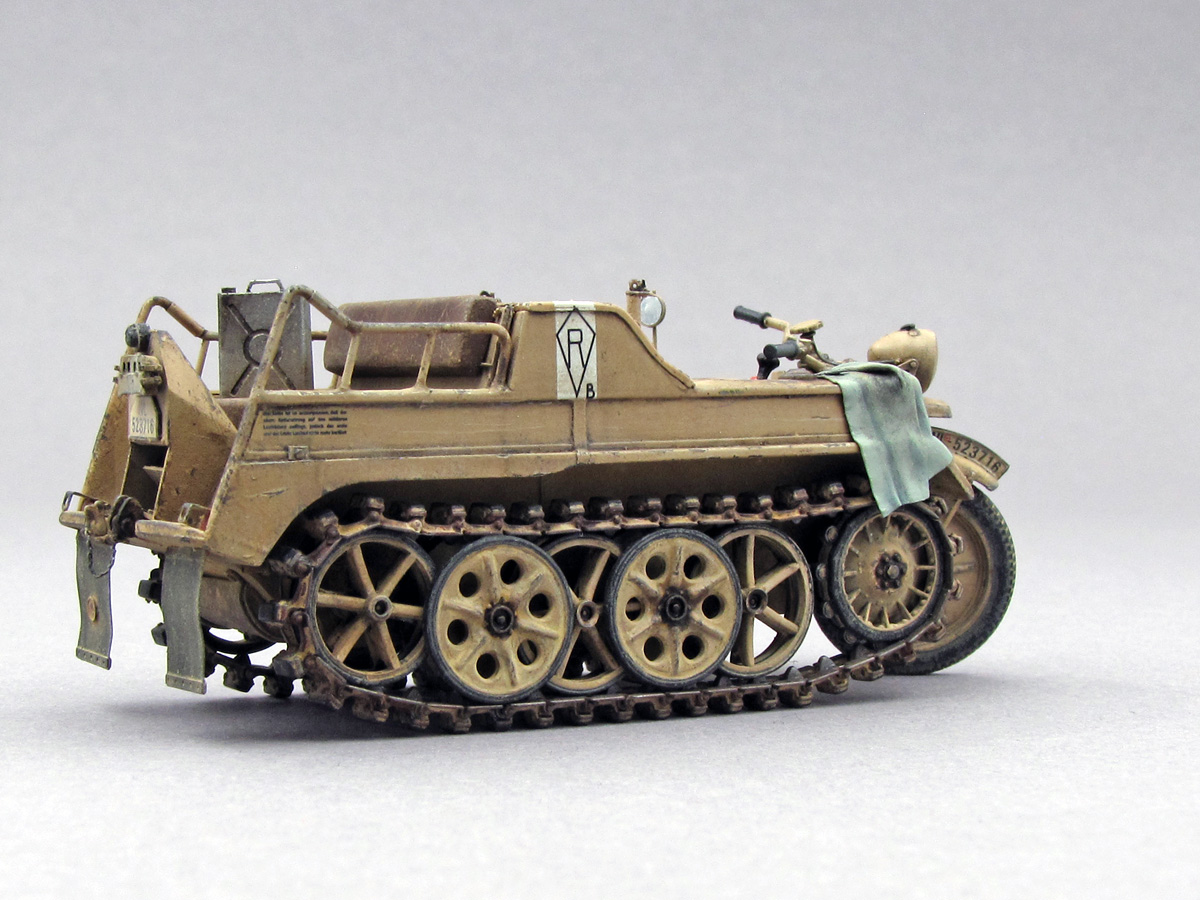
Sd.Kfz.2 Kettenkrad

The Sd.Kfz. 2 Kettenkrad was a multipurpose half-track motorcycle with a single front wheel. Originally designed as a light tractor for airborne troops, it had to be compact enough to fit inside the cargo hold of a Junkers Ju 52 transport aircraft. Developed by NSU Werke AG in 1939, it entered production in late 1940.

The Kettenkrad had excellent cross-country mobility and could carry two passengers in addition to the driver. Its rated payload was 325 kg, including the crew. Although designed for airborne forces, it was widely used by regular Wehrmacht units, proving to be a reliable and capable vehicle in difficult terrain. It served as a reconnaissance vehicle, artillery tractor, cable-laying vehicle, medical transport and infantry carrier. Towards the end of the war, it was also used to tow aircraft around airfields. The Kettenkrad saw service on the Eastern Front, elsewhere in Europe and in North Africa.

The vehicle weighed 1,560 kg and was powered by a 36 hp Opel four-cylinder petrol engine, giving it a top speed of 70 km/h on good roads. It was steered using handlebars, with the front wheel providing gentle directional control, while sharper turns automatically engaged the brake on the corresponding track. A total of 8,345 Kettenkrads were built during the war. Production continued until 1948, with approximately 550 additional vehicles manufactured after the war as agricultural tractors.

The model depicts an early-production Kettenkrad serving with the Luftwaffe’s Ramcke Brigade in North Africa in 1942–43.

More about the model and its construction can be found at this link

Model: 1:35 Dragon 6128, Sd.Kfz.2/2 kleines Kettenkrad w/sch. Feldkable
+ Eduard 35700 Kettenkraftrad w/sch. Feldkabel
+ T-Rex Studio TR35098 Front Fork for Kettenkraftrad
+ T-Rex Studio TR85059 Kettenkraftrad Tracks w/Sprockets
+ Passion Models P35D-013 Kettenkraftrad Decal Set
+ Archer AR35313 Scwimmwagen, Kübelwagen and Kettenkrad Instruments and Plackards