The Matilda II was a British infantry tank produced between 1937 and 1943. Development began in 1936 in response to the A12 specification, which called for a large, heavily armoured infantry tank armed with a gun and a machine gun.
For its time, the Matilda II was exceptionally well protected, with armour ranging from 20 to 78 mm in thickness. The tank weighed 25 tonnes and was armed with a QF 2-pounder (40 mm) gun and a 7.92 mm Besa machine gun mounted in the gun mantlet. Its crew consisted of four men. Power was provided by two 7-litre six-cylinder Leyland diesel engines with a combined output of 140 kW, giving the tank a top speed of 24 km/h on roads and 14 km/h cross-country.
Despite its excellent armour protection, the Matilda was heavy and slow, in keeping with British infantry tank doctrine of the period. It saw action in France in 1940, where its thick armour made it a formidable opponent for German tanks. It was subsequently deployed to North Africa, where it earned the nickname ‘Queen of the Desert’. By the later years of the war, the Matilda had become increasingly obsolete compared with newer tanks. Nevertheless, it remained in service until the end of the war in Europe, on the Eastern Front with Soviet forces and in the Pacific with Australian forces.
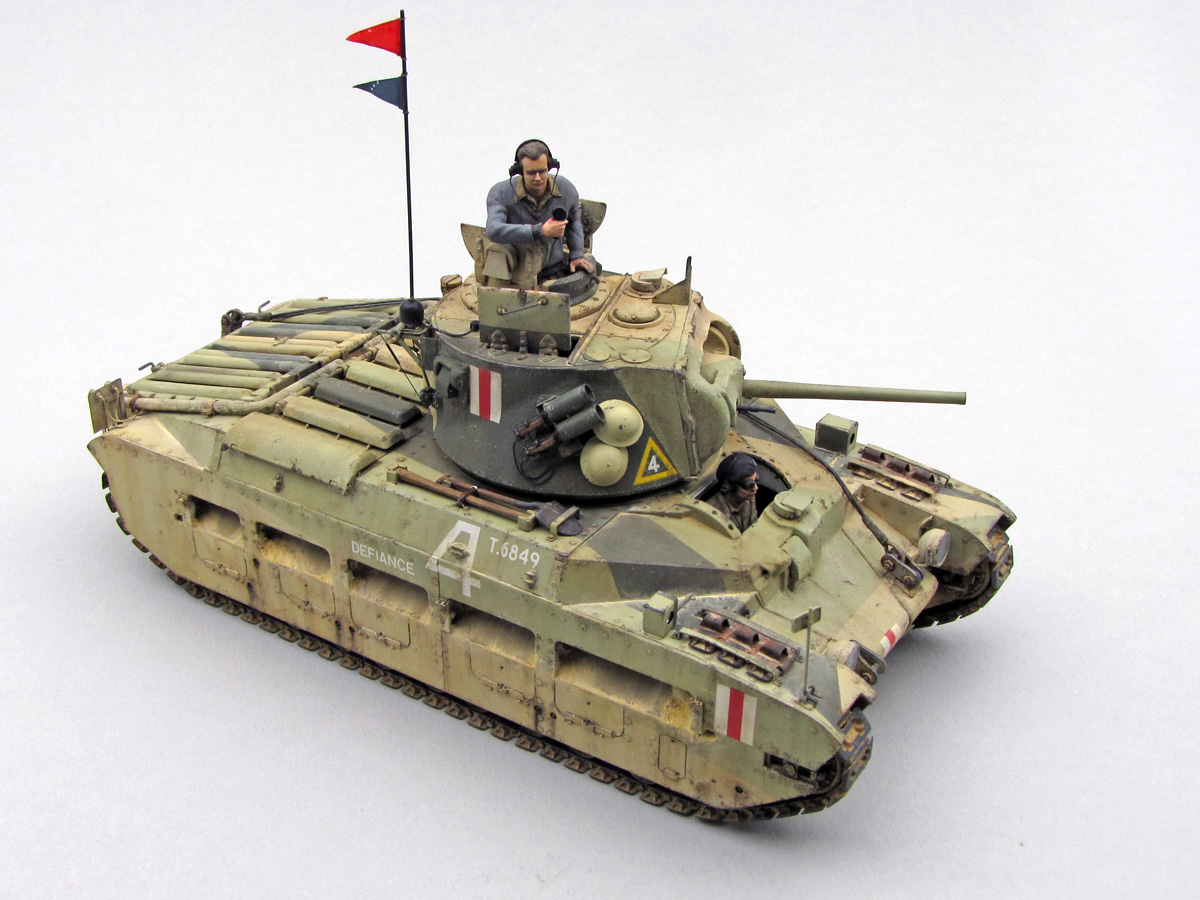
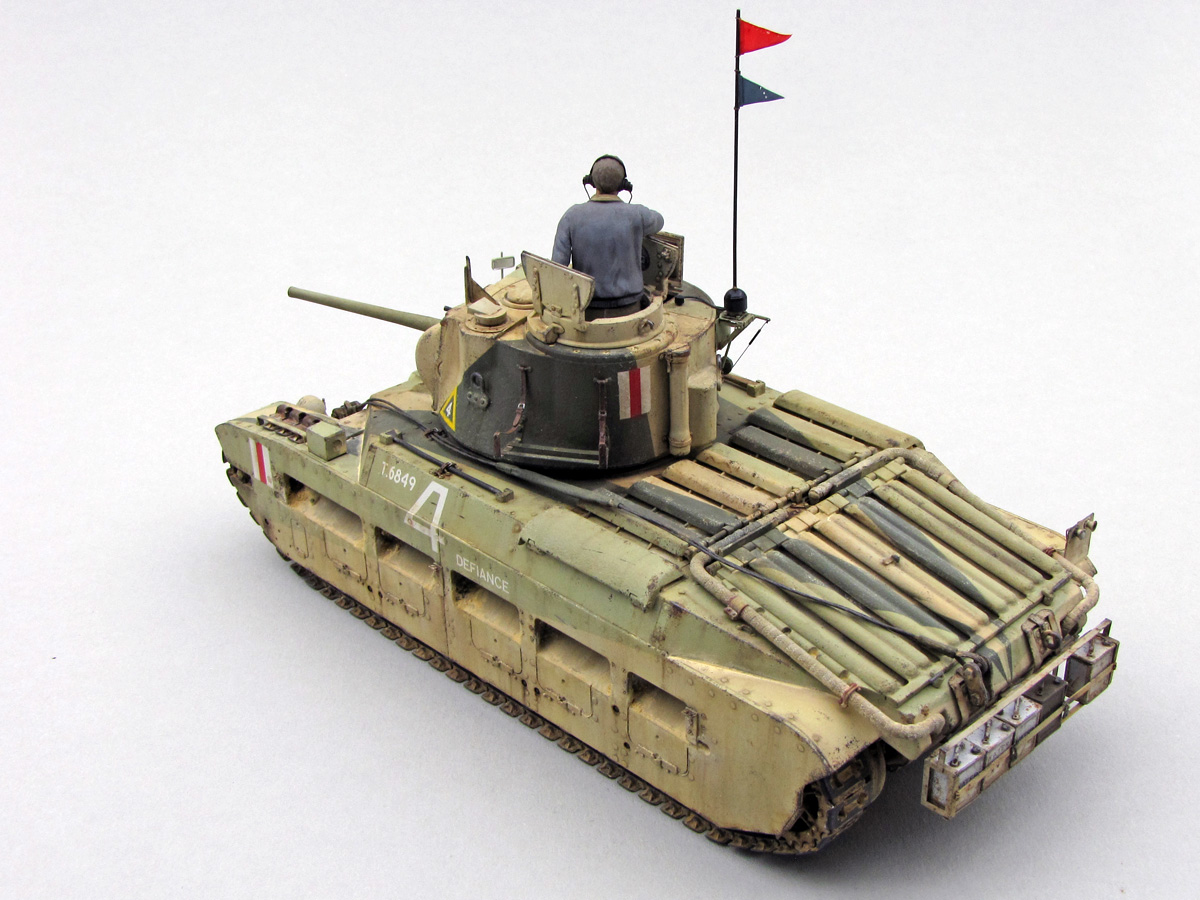
The model depicts a Matilda II Mk.IV of the 32nd Army Tank Brigade near Tobruk, North Africa, in late 1941 during Operation Crusader.
More about the model and its construction can be found at this link




No comments:
Post a Comment